Sunday, August 19, 2007

Hopefully the Last about Rove

Amid all the sturm and drang -- okay, a lot of it was the usual Big Media fog of bullshit -- about Bush's brain's retirement, I thought that Rove's biggest sin, what he should be most reviled for, was all the stuff he did below the presidential level, the further debasement of politicking right wingnut style. Not to mention the not-unimportant query: How gone is he anyway?

Finally, I'm seconded, more or less. Josh Marshall:
Is it me or is the most remarkable thing about Karl Rove's resignation that it seems almost like a non-event? I had the feeling as the day wore on that all of us in the news and commentary business were trying to make it a big event. But somehow it just wasn't there.

Rove has been one of the two or three central, polarizing figures of the decade -- an often feared and hated figure among Democrats, at the center of most of the major political scandals of the Bush era, the architect (or so it seemed) of a Republican dominance slated to last a generation. Little more than a year ago you could find a half dozen newly-minted books on the shelves explaining the perpetual motion machine of right-wing dominance he had created. And yet today, when he resigns, I sense that no one really has much to say about it.

Yes, every politics or hard news publication has at least a couple articles marking the moment. But not with much ooomph or much to say.

In part this must be because Rove's departure seems unequal to his billing. It fits no one's expectations. He's certainly not leaving in triumph. And, for the moment, not in handcuffs either.

As I wrote years ago now, Rove's whole model of political advocacy and organization was built on a confidence game. Say improbable things are true often enough, and confidently enough, and the believing of it by enough people will make it so. The pyramid scheme, borrow-against-tomorrow nature of their game now seems exposed for all to see -- whether it's in the agony of Iraq or more prosaically in low state in which he appears to be leaving the Republican party. But judged in purely amoral, functional terms, for three straight elections, it was quite a run. It was only because of that improbable string of successes that many people, deep into the 2006 election cycle, still refused to believe what the polls were manifestly showing them.

I continue to think that there's an unrevealed factor behind Rove departure. But at this point it almost doesn't matter. This feels like a non-event because the story is already played out. The question of Iraq remains bitter and intense. But on the cynicism of Bush-Rove rule, its damage to the country and its destructiveness to the Republican party, across a broad swath of the electorate, it's difficult to find much of an argument. So really what is there left to say?

The Primary Job Responsibility of the U.S> Attorney General is to Lie

Link.

The Basis for Rudy's World View

It all revolves around what's good for his wallet, not the world. Kind of like Dick Cheney.

Our Beloved Leader: A Man who has his Priorities Straight

Idiot. No other word.
In August 2001, the president read a memo titled "Bin Ladin Determined to Strike in US." Bush didn't much care, telling his CIA briefer, "All right. You've covered your ass, now."

In August 2007, the president read a style article in a mid-size newspaper about the clothes he wears in Crawford. About this, Bush cared very much.
What really gets George W. Bush riled up? Calling him a fashion victim.

Last week, Marques Harper of the Austin American-Statesman wrote a short piece about the president's sartorial style on his Texas ranch, where Bush is spending a two-week vacation. The article was reprinted Tuesday in a Waco, Tex., paper, and the leader of the free world was not pleased.

Harper received a phone call that morning from White House deputy press secretary Dana Perino, who, Harper told friends, said the president read the article and was unhappy about the way he was portrayed.
First, this comes just days after Karl Rove told Rush Limbaugh about the president's healthy, above-the-fray attitude about criticism in the media. Rove boasted, "The president is very good about saying, 'Look, we came here for a reason. We have an obligation on the country,' and press on by it. I'll be hyperventilating about the latest attack on him by somebody, and he'll say, 'Don't worry. History will get it right and we'll both be dead.' So it's a good, healthy attitude about how to take it." I guess that doesn't apply to his fashion sense.

Second, the article itself was entirely benign, noting that Bush has "opted to look more like 'Walker, Texas Ranger' than a sweaty, tough ranch hand." This mild remark in a brief article was enough for the spokesperson for the President of the United States to call a style reporter for a mid-size newspaper to convey the disappointment of the leader of the free world.

And third, I've heard rumors that George W. Bush is a charming fellow who's easy to get along with. Policies aside, he's supposed to be a "great guy." I don't buy it. Incidents like this one make the president sound temperamental and immature.

Indeed, if we take the White House pitch at face value, Bush is a tough guy, hardened by war, and unconcerned about pettiness -- unless the Austin American-Statesman says something vaguely derogatory about his clothes?
Link.

Our Leaders: Making Us Safer

Thank God George W. Bush is president!
Troops training for and fighting the wars in Iraq and Afghanistan are firing more than 1 billion bullets a year, contributing to ammunition shortages hitting police departments nationwide and preventing some officers from training with the weapons they carry on patrol.

An Associated Press review of dozens of police and sheriff's departments found that many are struggling with delays of as long as a year for both handgun and rifle ammunition. And the shortages are resulting in prices as much as double what departments were paying just a year ago.

"There were warehouses full of it. Now, that isn't the case," said Al Aden, police chief in Pierre, S.D.

Departments in all parts of the country reported delays or reductions in training and, in at least one case, a proposal to use paint-ball guns in firing drills as a way to conserve real ammo.

"You are not going to be as sharp or as good, especially if an emergency situation comes up," said Sgt. James MacGillis, range master for the Milwaukee police. "The better-trained officer is the one that is less likely to use force."

The pinch is blamed on a skyrocketing demand for ammunition that followed the start of the wars in Iraq and Afghanistan, driven by the training needs of a military at war, and, ironically, police departments increasing their own practice regimens following the Sept. 11 terrorist attacks. The increasingly voracious demand for copper and lead overseas, especially in China, has also been a factor.

The military is in no danger of running out because it gets the overwhelming majority of its ammunition from a dedicated plant outside Kansas City. But police are at the mercy of commercial manufacturers.

None of the departments surveyed by the AP said it had pulled guns off the street, and many departments reported no problems buying ammunition. But others told the AP they face higher prices and months-long delays.

In Oklahoma City, for example, officers cannot qualify with AR-15 rifles because the department does not have enough .223-caliber ammunition _ a round similar to that fired by the military's M-16 and M4 rifles. Last fall, an ammunition shortage forced the department to cancel qualification courses for several different guns.

"We've got to teach the officers how to use the weapon, and they've got to be able to go to the range and qualify with the weapon and show proficiency," said department spokesman Capt. Steve McCool. "And you can't do that unless you have the rounds."

In Milwaukee, supplies of .40-caliber handgun bullets and .223-caliber rifle rounds have gotten so low the department has repeatedly dipped into its ammunition reserves. Some weapons training has already been cut by 30 percent, and lessons on rifles have been altered to conserve bullets.

Unlike troops in an active war zone, patrol officers rarely fire their weapons in the line of duty. Even then, an officer in a firefight isn't likely to shoot more than a dozen rounds, said Asheville, N.C., police training officer Lt. Gary Gudac. That, he said, makes training with live ammunition for real-life situations _ such as a vehicle stop _ so essential.

"We spend a lot of money and time making sure the officers are able to shoot a moving target or shoot back into a vehicle," Gudac said. "Any time we have a deadly force encounter, one of the first things we pull is the officer's qualification records."

In Trenton, N.J., a lack of available ammunition led the city to give up plans to convert its force to .45-caliber handguns. Last year, the sheriff's department in Bergen County, N.J., had to borrow 26,000 rounds of .40-caliber ammunition to complete twice-a-year training for officers.

"Now we're planning at least a year and a half, even two years in advance," said Bergen County Detective David Macey, a firearms examiner.

In Phoenix, an order for .38-caliber rounds placed a year ago has yet to arrive, meaning no officer can currently qualify with a .38 Special revolver.

"We got creative in how we do in training," said Sgt. Bret Draughn, who supervises the department's ammunition purchases. "We had to cut out extra practice sessions. We cut back in certain areas so we don't have to cut out mandatory training."

In Wyoming, the state leaned on its ammunition supplier earlier this year so every state trooper could qualify on the standard-issue AR-15 rifle, said Capt. Bill Morse. Rifle rounds scheduled to arrive in January did not show up until May, leading to a rush of troopers trying to qualify by the deadline.

"We didn't (initially) have enough ammunition to qualify everybody in the state," Morse said.

In Indianapolis, police spokesman Lt. Jeff Duhamell said the department has enough ammunition for now, but is considering using paint balls during a two-week training course, during which recruits fire normally fire about 1,000 rounds each.

"It's all based on the demands in Iraq," Duhamell said. "A lot of the companies are trying to keep up with the demands of the war and the demands of training police departments. The price increased too _ went up 15 to 20 percent _ and they were advising us ... to order as much as you can."

Higher prices are common. In Madison, Wis., police Sgt. Lauri Schwartz said the city spent $40,000 on ammunition in 2004, a figure that rose to $53,000 this year. The department is budgeting for prices 22 percent higher in 2008. In Arkansas, Fort Smith police now pay twice as much as they did last year for 500-round cases of .40-caliber ammunition.

"We really don't have a lot of choices," Cpl. Mikeal Bates said. "In our profession, we have to have it."

The Lake City Army Ammunition Plant in Independence, Mo., directly supplies the military with more than 80 percent of its small-arms ammunition. Production at the factory has more than tripled since 2002, rising from roughly 425 million rounds that year to 1.4 billion rounds in 2006, according to the Joint Munitions Command at the Rock Island Arsenal in Illinois.

Most of the rest of the military's small-arms ammunition comes from Falls Church, Va.-based General Dynamics Corp., which relies partly on subcontractors _ some of whom also supply police departments. Right now, their priority is filling the military's orders, said Darren Newsom, general manager of The Hunting Shack in Stevensville, Mont., which ships 250,000 rounds a day as it supplies ammunition to 3,000 police departments nationwide.

"There's just a major shortage on ammo in the U.S. right now," he said, pointing to his current backorder for 2.5 million rounds of .223-caliber ammunition. "It's just terrible."

Police say the .223-caliber rifle round is generally the hardest to find. Even though rounds used by the military are not exactly the same as those sold to police, they are made from the same metals and often using the same equipment.

Alliant Techsystems Inc., which runs the Lake City plant for the Army, also produced more than 5 billion rounds for hunting and police use last year, making the Edina, Minn.-based company the country's largest ammunition manufacturer. Spokesman Bryce Hallowell questioned whether the Iraq war had a direct effect on the ammunition available to police, but said there was no doubt that surging demand was affecting supply.

"We had looked at this and didn't know if it was an anomaly or a long-term trend," Hallowell said. "We started running plants 24/7. Now we think it is long-term, so we're going to build more production capability."

That unrelenting demand for ammunition will continue to put a premium on planning ahead, said Maricopa County, Ariz., Sheriff Joe Arpaio, who so far has kept his department from experiencing any shortage-related problems.

"If we have a problem, I'll go make an issue of it _ if I have to go to Washington or the military," Arpaio said. "That is a serious thing ... if you don't have the firepower to protect the public and yourself."
Link.

And here's another victory for making the world safer and more secure:

Russian President Vladimir Putin said Friday that he has ordered the resumption of long-range strategic bomber flights, a return to a Cold War-era practice and another sign that the Kremlin is flexing its military might amid a deepening chill in relations with the United States.

Putin's decision comes a week after Russian fighter jets flew within a few hundred miles of a U.S. military base in Guam. On Friday, several pairs of Russian Tu-160 and Tu-95MC bombers were flying over Atlantic and Pacific waters, Russian Air Force spokesman Alexander Drobyshevsky told the Russian news agency ITAR-TASS.

"We proceed from the assumption that our partners will view the resumption of flights of Russia's strategic aviation with understanding," Putin said while attending war games being held by Russian and Chinese armed forces near the Ural Mountains city of Chelyabinsk. The exercises marked the first time Russian and Chinese forces held war games on Russian territory.

"Starting today, such tours of duty will be regular," Putin continued. "Our pilots have been grounded for too long and they are happy to start a new life."

***

During the Cold War, both the United States and the Soviet Union regularly kept in the air strategic bombers designed to deliver nuclear weapons. With the Soviet Union's collapse in 1991 and the economic troubles that followed, the Kremlin suspended regular flights of its long-range bombers and drastically cut back military spending.

Now, with Russia awash in cash generated by consistently high oil prices, Moscow has ratcheted up defense spending and sought to reassert its military prowess. In June, Russia tested a new cruise missile system and an intercontinental ballistic missile capable of penetrating American defenses.

In explaining his decision, Putin said that while Moscow stopped the practice of regular bomber flights after the Soviet collapse, other nations continued such missions - an apparent reference to the U.S.

"Unfortunately, not everyone followed suit, and strategic bomber flights by other states continue," Putin said.

Putin said about 20 bombers will be used to protect Russia's shipping lanes and territory within its economic zone.

Alexander Pikayev, a military affairs analyst with the Institute for World Economy and International Relations in Moscow, called Putin's move a "quite significant change in posture for Russian strategic forces."

While Putin did not specifically refer to Washington in his remarks, Pikayev said the Russian leader's actions might also stem from the Kremlin's frustration with the Bush administration's plans for a missile defense system in the Czech Republic and Poland.

The Mendacity and Lies of "Straight Talking" Loser John McCain

It's sad, having survived nearly six years of imprisonment by the North Vietnamese but the truth is that he is and always has been a pandering, hypocritical dope (who married well and became his father-in-law's puppet -- but that's another story). Yes, it's sad....

Except he really wants to be president, and what this country doesn't specially need now is to replace the current leadership with one as bad (or even possibly worse).
KIRAN CHETRY: It seems you've been painted as being a huge supporter of the president's Iraq strategy. Is that an inaccurate portrayal?

MCCAIN: It's entertaining, in that I was the greatest critic of the initial four years, three and a half years. I came back from my first trip to Iraq and said, "This is going to fail." We've got to change the strategy to the one we're using now. But life isn't fair.
Poor John McCain. All he did was support the current Iraq policy every step of the way for five years and, for some reason, foolish Americans have come to believe he supports the president's strategy. How terribly unfair.

Look, this notion of who qualifies as a "critic" of the White House's war policy came to a head recently when far too many news outlets falsely characterized Michael O'Hanlon and Ken Pollack as opponents of the war. Their support for Bush's strategy was given greater weight because the media and the GOP establishment told the public they have been war "skeptics." They're not -- O'Hanlon and Pollack supported the invasion, endorsed the so-called surge, and have consistently opposed withdrawal. (Ironically, Jon Stewart, the fake newsman, was one of the few to get this right.)

Similarly, we now see McCain characterizing himself as "the greatest critic of the initial four years." Perhaps it's best if we establish some kind of criteria for who counts as a "critic" and who counts as a "supporter."

Did you:

* endorse the invasion?

* buy into the Cheney vision of a quick, easy-to-resolve conflict?

* support the administration's position on every piece of Iraq legislation since 2002?

* consistently support the status quo? ("I'm confident we're on the right course" -- McCain, March 7, 2004)

* endorse the escalation policy?

* oppose any and all measures to include timelines, scheduled withdrawals, or enforced benchmarks?

If you're McCain, the answer to all six questions is "yes." With that in mind, you don't get to call yourself "the greatest critic" of the president's policy.
Link.

Poster of the Day


Link
.

Saturday, August 18, 2007

Message for the Day


Link
.

Movie Spoiler: "Bourne Ultimatum" Ends with Total Bogus Fantasy

It could never, would never happen in the world in which we presently live. It's a complete and absolute fantasy. Unfortunately.

Tricky Dick is Honored to Meet the King of Drug Agents


Link.

Yeah, yeah, I know, a cheap shot but an iconic image of the King, late in his career, being published on the occasion (give or take a couple of days) of the 30th anniversary of his tragic passing, before he could find peace....

Rudy's Whacky Foreign Policy, Analyzed


Rudy Giuliani's essay in the latest issue of Foreign Affairs, laying out his ideas for a new U.S. foreign policy, is one of the shallowest articles of its kind I've ever read. Had it been written for a freshman course on international relations, it would deserve at best a C-minus (with a concerned note to come see the professor as soon as possible). That it was written by a man who wants to be president—and who recently said that he understands the terrorist threat "better than anyone else running"—is either the stuff of high satire or cause to consider moving to, or out of, the country.
The article contains so many bizarre statements, it's hard to know where to start, so let's begin at the beginning and go from there.

"Confronted with an act of war on American soil, our old assumptions about conflict between nation-states fell away."

Why? The biggest worry about al-Qaida after 9/11 was that it had essentially taken over a nation-state, Afghanistan. Giuliani's (and President George W. Bush's) stated fear now is that it might take over Iraq. The rise of transnational terrorist movements adds a twist to the system of nation-states but hardly supersedes it or nullifies the main assumptions about conflict. Giuliani contradicts his own point halfway into the essay when he writes, "There is no realistic alternative to the sovereign state system."

"Much like at the beginning of the Cold War, we are at the dawn of a new era in global affairs, when old ideas have to be rethought and new ideas have to be devised to meet new challenges."

Let's say this is true. What are Giuliani's "new ideas"? He never says.

"[Our enemies] follow a violent ideology: radical Islamic fascism, which uses the mask of religion to further totalitarian goals and aims to destroy the existing international system. … The purpose of this fight must be to defeat the terrorists and the insurgents in Iraq and Afghanistan."

The "terrorists and the insurgents"? Are they the same? President Bush has recently (if belatedly) discovered that they are not; that alliances of convenience can be formed with the latter to combat the former. One such alliance, with the Sunni insurgents in Anbar province, has led to the war's most encouraging development in some time. By equating insurgents with terrorists, and by lumping all Islamic radicals into a monolithic threat akin to global fascism, Giuliani not only exaggerates their strength and cohesion but also overlooks—declares impossible—any opportunities for playing the various movements off one another. A statesman looks for ways to unite allies and divide enemies. Giuliani, in this sense, is the anti-statesman.

"America must remember one of the lessons of the Vietnam War. … Many historians today believe that by about 1972 we and our South Vietnamese partners had succeeded in defeating the Vietcong insurgency and in setting South Vietnam on a path to political self-sufficiency. But America then withdrew its support, allowing the communist North to conquer the South. The consequences were dire, and not only in Vietnam: numerous deaths in places such as the killing fields of Cambodia, a newly energized and expansionist Soviet Union, and a weaker America."

Does he really believe this? What books have his advisers been giving him? The "South Vietnamese partners" were as corrupt and illegitimate as they come. The Khmer Rouge came to power amid a political vacuum that was spawned as much by Nixon's secret bombing of Cambodia as by anything else. As for the "expansionist" Soviet Union, things didn't end very well for the Moscow Politburo. America, it is now widely agreed, was weakened by the Vietnam War, not by its termination. And, by the way, how about that "domino theory"? You'd think from his description that Southeast Asia has subsequently all gone Communist.

"The idea of a post-Cold War 'peace dividend' was a serious mistake—the product of wishful thinking and the opposite of true realism."

The first shares of a peace dividend were cashed in not by President Bill Clinton, as Giuliani is suggesting, but by the first President Bush and his secretary of defense, Dick Cheney. The Soviet Union—at the time, the main target of the U.S. military establishment—had just evaporated. What president would not have cut the military budget? Had some president kept the military budget at its Cold War level, how would he or she have spent it? On what kinds of weapons, against what threats? (Al-Qaida did not yet exist, and even its nascent elements were not perceived as a threat by anyone.)

"The U.S. Army needs a minimum of ten new combat brigades. … We must also take a hard look at other requirements, especially in terms of submarines, modern long-range bombers, and in-flight refueling tankers."

Ten combat brigades translate to 40,000 to 50,000 soldiers. The Army has a hard time recruiting 7,000 new combat soldiers a year. Does Giuliani have any ideas on how to get more? Giuliani doesn't explain why more submarines, bombers, and tankers are necessary for the war on terror (or, as he puts it, "the Terrorists' War on Us").* Could he be pandering to the Navy and Air Force?

Could he be pandering to the Navy and Air Force?

"The next U.S. president must also press ahead with building a national missile defense system. … Bush deserves credit for changing America's course on this issue. But progress needs to be accelerated."

Bush is spending $10 billion a year on missile defense. How much does Giuliani want to spend? Perhaps he doesn't realize that, despite enthusiastic support from the White House, vast elements of the program have been slowed down—and tests have had to be canceled—because, as the program's own managers have acknowledged, the technology simply is not ready (and, many critics charge, may never be workable).

"Constellations of satellites that can watch arms factories everywhere around the globe, day and night, above- and belowground ... must be part of America's arsenal."

Yes, and while we're at it, let's build anti-gravity machines, mind-reading robots, X-ray-vision telescopes, speed-of-light transporter-beams, time-travel kits, and intercontinental heat-seeking bullets. It's bad enough that so many foreigners believe in the omniscience of U.S. intelligence agencies; it's appalling that a presidential candidate seems to believe such sci-fi fantasies, too.

"We must also develop the capability to prevent an attack—including a clandestine attack—by those who cannot be deterred."

Note the word "prevent," not "intercept." He seems to be talking here about something other than missile defense. But what?

"Those with whom we negotiate—whether ally or adversary—must know that America has other options. The theocrats ruling Iran need to understand that we can wield the stick as well as the carrot, by undermining popular support for their regime, damaging the Iranian economy, weakening Iran's military, and, should all else fail, destroying its nuclear infrastructure."

The theocrats do understand that we can wield the stick. That may be one reason they want to build a nuclear bomb. It's unclear how we're supposed to "undermine popular support" for the regime. Perhaps Giuliani doesn't know about the "Mossadegh syndrome," whereby any U.S. effort to intervene in Iran's internal affairs tends only to alienate the Iranian people (who are otherwise quite pro-American) and to galvanize popular support for the mullahs' regime.

"The time has come to redefine the diplomats' mission down to their core purpose: presenting U.S. policy to the rest of the world. … Our ambassadors must clearly understand and clearly advocate for U.S. policies and be judged on the results. Too many people denounce our country or our policies simply because they are confident that they will not hear any serious refutation from our representatives. The American ideals of freedom and democracy deserve stronger advocacy. And the era of cost-free anti-Americanism must end."

So much for a professional diplomatic corps. Yes, ambassadors are supposed to advocate U.S. policies, but they are also supposed to inform U.S. policy-makers about what's going on in the countries where they're stationed. The main reason "too many people denounce our country or our policies" isn't because they win debaters' points, it's because they don't like our policies; an ambassador might help a president understand why. As a recent RAND Corp. study on public diplomacy put it: "Misunderstanding of American values is not the principal source of anti-Americanism." It's "some U.S. policies [that] have been, are, and will continue to be major sources of anti-Americanism." (Italics in the original report.)

It is unclear what Giuliani means by his last sentence—that "the era of cost-free anti-Americanism must end." Are we to penalize or attack other countries simply because they don't like us?

"Washington should also make clear that only if China and Russia move toward democracy, civil liberties, and an open and uncorrupted economy will they benefit from the vast possibilities available in the world today."

Here we see at work one of Giuliani's most deluded assumptions—that the United States controls the world. China and Russia seem to be benefiting from the global market's "vast possibilities" quite nicely without our assistance at the moment. China, in fact, is doing quite a lot to finance our debt. What instruments of leverage does Giuliani think he'll have to impose his will here? How are we supposed to reward or penalize the Russians and Chinese for their compliance or disobedience?

"The international community must also learn from the mistakes that allowed the genocide in Darfur to begin and have prevented the relevant international organizations from ending it."

How to do this—what the "mistakes" were, what lessons we should all learn, and just who he means by the "international community"—Giuliani doesn't explain.

"Despite the U.N.'s flaws … the great objectives of humanity would become even more difficult to achieve without mechanisms for international discussion. History has shown that such institutions work best when the United States leads them. Yet we cannot take for granted that they will work forever and must be prepared to look to other tools."

Huh?

"America has a clear interest in helping to establish good governance throughout the world."

Giuliani seems not to have heard that reform advocates, especially in the Middle East, complain and lament that any association with America these days means the discrediting of their efforts. This is the direct result of Bush's arrogance. Giuliani's attitude would, if anything, intensify this disturbing phenomenon.

"The Palestinian people need decent governance first, as a prerequisite for statehood."

There's something to this, but he leaves unstated what their leaders are supposed to govern if they don't have statehood.

"Our cultural and commercial influence can also have a positive impact. They did during the Cold War. … Companies such as Pepsi, Coca-Cola, McDonald's, and Levi's helped win the Cold War by entering the Soviet market. … Today, we need a similar type of exchange with the Muslim countries that we hope to plug into the global economy."

In the Cold War, many Russians hated their Communist government—and, by extension, found enticing the capitalist West with its goods and boisterous pop culture. They were also exposed to merely two types of mass media—the controlled Soviet press on the one hand, and Voice of America, Radio Free Europe, and bootlegged jazz and rock records on the other. To the degree people in the Muslim world hate their governments, they don't necessarily see the United States as an attractive alternative. Quite the contrary. They also have access to vast worldwide media. Clearly, it would be very useful to find some cultural bridge between the West and Islam. But Giuliani gives no hint of what that might be. Nor does he seem to recognize that the Cold War's lessons, in this respect, have little relevance for today.

"I know from personal experience that when security is established in a troubled part of a city, normal life rapidly reestablishes itself. … The same is true in world affairs. … Civil society can triumph over chaos if it is backed by determined action."

Here is another of Giuliani's potentially dangerous assumptions on display—that being mayor of New York City isn't so different from being president of the United States. One difference, among many, is that the mayor doesn't need to negotiate with the Queens borough president before sending more cops to Jackson Heights. Another difference is that, once the cops do go to Jackson Heights, they are generally recognized as figures of authority; their guns and badges carry legitimacy; it's a major news story, not a commonplace event, when the bad guys respond by drawing their own guns, much less firing back.

"President Bush put America on the offensive against terrorists. … But times and challenges change, and our nation must be flexible. … America's next president must … craft policies to fit the needs of the decade ahead, even as the nation stays on the offensive against the terrorist threat."

Nowhere does Giuliani outline how his policies would differ from Bush's or, for that matter, how his notion of staying on "the offensive" against terrorists would differ from the policies of any of the top three Democratic candidates. He doesn't seem to know how they would differ. He doesn't seem to know what he's talking about at all.

Two months ago, when Giuliani issued some of his first pronouncements on foreign policy, I wrote that he is "that most dangerous would-be world leader: a man who doesn't seem to know how much he doesn't know." Judging from his Foreign Affairs article, the breadth and depth of his cluelessness are vaster than even I had imagined.
Link.

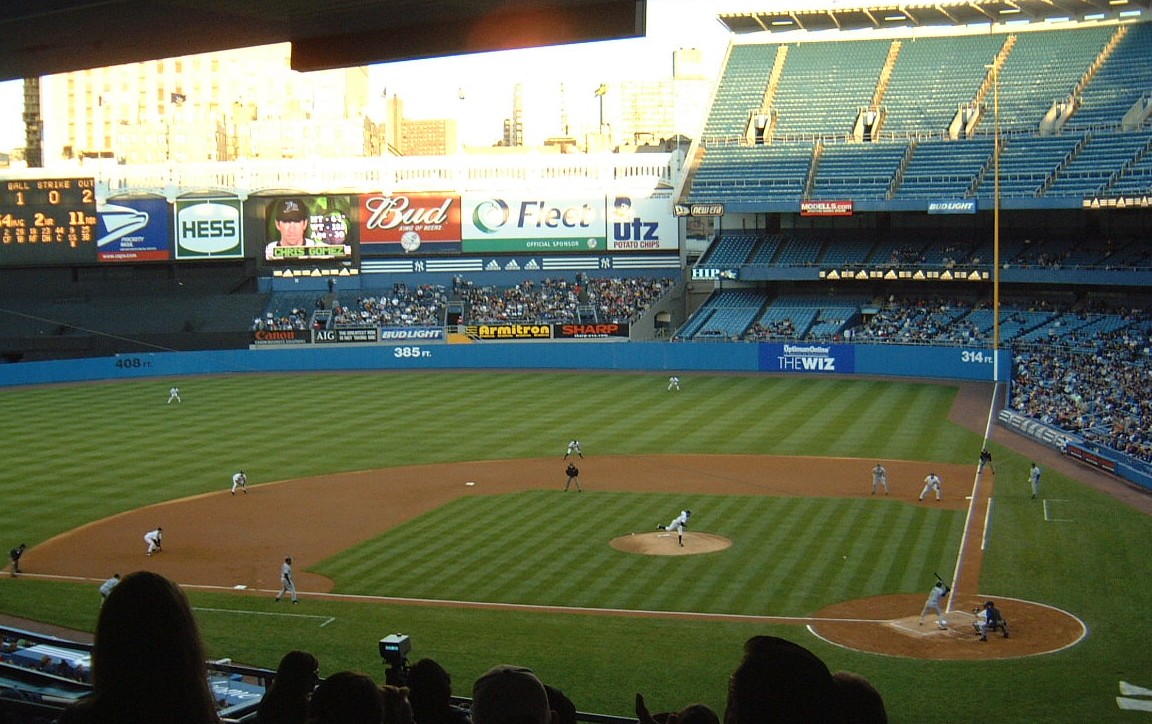
An American Hero: Ground Zeroi, Yankee Stadium -- What's the difference?

On Friday, a New York Times story examined Rudy Giuliani's schedule in the months after 9/11 to verify his controversial claim that, like rescue workers, he'd spent long hours at ground zero, and so was "in that sense ... one of them." In fact, the Times found, he only spent 29 hours at the terror site between Sept. 17 and Dec. 16.

What was he doing instead? Giuliani's beloved New York Yankees made it to the World Series in 2001. We decided to compare the time he spent on baseball to the time he spent at the ruins of the World Trade Center.

The results were, considering the mayor's long-standing devotion to the Bronx Bombers, unsurprising. By our count, Giuliani spent about 58 hours at Yankees games or flying to them in the 40 days between Sept. 25 and Nov. 4, roughly twice as long as he spent at ground zero in the 60 days between Sept. 17 and Dec. 16. By his own standard, Giuliani was one of the Yankees more than he was one of the rescue workers.

During three postseason playoff series that began Oct. 10, 2001, and ended Nov. 4, 2001, Giuliani attended every one of the team's home games, with the possible exception of the third game of the American League Championship Series, for which Salon could not confirm his attendance. According to Salon's arithmetic, Giuliani spent about 33 hours in stadiums -- this includes two World Series games he watched in Phoenix -- during the Yankees' 2001 postseason run, four hours more than he spent at ground zero. (We do not know if he stayed for every pitch, but famed baseball writer Roger Angell described Giuliani in the the New Yorker as a "devout Yankee fan, a guy who stays on until the end of the game.")

Giuliani also attended the first regular season game the Yankees played in New York after the attacks; that game lasted almost three hours. (We do not know if he was present for any of the Yankees' other seven post-9/11 home games.) And he spent one of the away World Series games in a specially reserved box with his son at the ESPN Zone in Times Square, London's Daily Mail reported. The Daily Mail said he did that, in fact, for every away game of the American League Championship Series and the Yankees' first-round Division Series against the Oakland A's, but Salon could not independently verify that report. (Giuliani watched the first game of the World Series from his City Hall office.)

Then there's the whirlwind tour Giuliani made traveling back and forth to Arizona for games six and seven of the World Series. Granted, he and his now-estranged children were traveling with a small entourage composed of the families of some of 9/11's victims; Major League Baseball had chipped in free tickets, Continental Airlines had donated a charter jet, and hotel rooms were comped as well. Still, once those families were in Arizona, Giuliani -- who had been predicting that game six would bring a Yankees victory and an end to the series -- made an extraordinary effort to ensure that he could attend to his responsibilities in New York and still make it back for game seven.

Giuliani left game six midway through, the Associated Press reported at the time, so that he could make his 12:30 a.m. flight back to New York, where he needed to spend some time discussing the U.S. anthrax attacks, which by then had touched New York's City Hall. The mayor was in Staten Island by 9:30 a.m. to kick off the New York City Marathon. Then it was back to the airport a few hours later, and on to Arizona for game seven. That, in total, meant 22 hours in the air.

But Giuliani's involvement with the team went far beyond a time commitment. He was, in fact, a visible, constant presence at the postseason games and, more than once, a participant in the team's victory celebrations. Dave Johnson, executive sports editor of the Evansville Courier & Press, even wrote a column at the time bemoaning Giuliani's omnipresence and saying, "If I didn't already dislike the New York Yankees, I'd root against them just because of Rudolph Giuliani ... Who anointed Rudy baseball's new Super Fan?" The mayor was pulled on the field after the Yankees clinched both the American League Division Series and Championship Series, and spent time in the clubhouse after those victories as well.

Nor did Giuliani's involvement start as some attempt to boost the city's spirits after the tragedy it experienced. As the Village Voice's Wayne Barrett has previously reported, Giuliani has four Yankees World Series rings from the time he was mayor; by contrast, Barrett reported, no mayor in any other city that's won a championship since 1995 has any Series ring at all. Barrett also reported that Giuliani attended at least 20 of the Yankees regular season games each year he was mayor.

Giuliani also found time during the period studied by the Times to, for example, make a call to slugger Jason Giambi exhorting him to leave the A's and sign with the Yankees. Giambi did, on Dec. 13. A day later, Giuliani introduced Giambi at City Hall, where, according to the Associated Press, Giambi said, "[Giuliani] was going to help me find somewhere to live, so I'm going to take him up on it."

And though the final budget he submitted as mayor called for serious belt-tightening around the city -- cuts as high as 15 percent for most agencies -- in the wake of the attacks and the $40 billion debt New York faced, Giuliani wasn't quite prepared to subject the Yankees or their counterpart Mets to the same penny-pinching. In fact, though nearly everyone expected 9/11 to cause the city to abandon the plans for new stadiums for the teams -- Long Island's Newsday reported that "since Sept. 11, several city officials, including [then-Mayor-elect Michael] Bloomberg, have said the projects were on the back burner because of the city's other pressing needs" -- Giuliani wanted to push forward. The stadiums were projected to have cost $1.6 billion in city, state and private funds.

Giuliani did need a place to play, after all. Though rumors were swirling at the time about what his future held after the end of his final term as mayor, Giuliani was generally unwilling to give specifics. He was willing, however, to jokingly suggest one possibility -- "right field for the Yankees," the Associated Press quoted him as saying while swinging an imaginary bat.
Link.

And what about that Times piece?
A complete record of Mr. Giuliani’s exposure to the site is not available for the chaotic six days after the attack, when he was a frequent visitor. But an exhaustively detailed account from his mayoral archive, revised after the events to account for last-minute changes on scheduled stops, does exist for the period of Sept. 17 to Dec. 16, 2001. It shows he was there for a total of 29 hours in those three months, often for short periods or to visit locations adjacent to the rubble. In that same period, many rescue and recovery workers put in daily 12-hour shifts.

***

he 29 hours Mr. Giuliani spent at ground zero involved 41 appearances, mostly to give tours to other officials and foreign dignitaries. Many entries include meetings away from the site before the tour. For instance, the schedule included 30 minutes on Nov. 15, 2001, for President Vladimir V. Putin of Russia, but Mr. Putin’s tour of ground zero was widely reported to have lasted 13 minutes.

Asked to reconcile what the records show with Mr. Giuliani’s public comments about the extent of his exposure to the site, his campaign provided a written statement from Joseph J. Lhota, a former deputy mayor.

“Hundreds of thousands of people around the country and the world saw Rudy Giuliani’s steadfast and determined leadership firsthand at a time when we needed it most,” the statement said. “In the days surrounding September 11th, the safety and health of all those involved in the search and recovery efforts was Mayor Giuliani’s No. 1 one priority. Make no mistake, it is the very same concern Mayor Giuliani continues to express today when it comes to all those who have made tremendous sacrifices at ground zero.”

The months after the attack have emerged as the focus of a contentious battle over the health effects of the cleanup, with workers at the site saying that their long-term exposure to toxins there caused serious illnesses, and that the Giuliani administration failed to recognize the risks in pushing for a speedy cleanup. [For you non-residents, note that reconstruction on the site has only recently, limitedly begun, thanks in no small part to delay and partisanship amongst the Republican leadership, "Bush", Pataki, Giuliani and Bloomberg. It's a fucking embarrassment that Ground Zero has had to remain a scarred pit for so long. -- the seditionist.]

***

“I was at ground zero as often, if not more, than most of the workers,” Mr. Giuliani said last week in Cincinnati. “I was there working with them. I was there guiding things. I was there bringing people there. But I was exposed to exactly the same things they were exposed to. So in that sense, I’m one of them.”

The next day, in an interview with Mike Gallagher, a talk show host, he expressed regret for the tone of his remarks, but reiterated the substance of them.

“I wasn’t trying to suggest a competition of any kind, which is the way it came across,” Mr. Giuliani said. “You know, what I was saying was, ‘I’m there with you.’ Gosh almighty, I was there often enough, even though they were there, people there more and people there less, but I was there often enough so that every health consequence that people have suffered, I could also be suffering.”

And in September 2006, The Associated Press quoted him as saying of ground zero, “I spent as much time here as anyone,” and then adding, “I was here five, six times a day for four months. I kind of thought of it as living here.”

A sample by Mount Sinai Medical Center of 1,138 participants in its study of health problems among rescue, recovery and debris removal workers found that they had spent a median of 962 hours at the World Trade Center site, or the equivalent of about 120 eight-hour days.
Link.

And for the out-of-towners, pictures of the two sites:

Ground Zero
:


Yankee Stadium
:

Friday, August 17, 2007

"I play a pervert-buster on TV but I really am a perv."

Link.

Yet Another Confused Ally

Saudi Arabia's Myth of Moderation

By Barbara Koeppel
August 17, 2007

Almost daily, the Bush administration ratchets up the war-like rhetoric about Iran’s alleged role in destabilizing Iraq. Eerily, like the pre-Iraq War drumbeat, the U.S. press repeats the accusations with little skepticism and Congress marches in lockstep, as a new Middle East villain is marked for punishment.

On Aug. 15, front-page stories in the New York Times, the Washington Post and other leading newspapers described how the Bush administration planned to designate Iran’s Revolutionary Guard Corps a “global terrorist” organization for supporting anti-U.S. and anti-Israeli forces in the Middle East.

The administration asserts that with the "terrorist" tag, the elite 125,000-man Guard is no longer a legitimate part of Iran’s military, but a rouge unit ripe for attacking. The move pushes the United States dangerously close to a direct confrontation with Iran, even as the death toll and spending on the wars in Iraq and Afghanistan continue to spiral out of control.

Yet, the U.S. finger-pointing at Iran’s support for Iraqi Shiite militias, including alleged deliveries of armor-piercing explosive devices, obscures the fact that U.S. ally, Saudi Arabia, is implicated by far more persuasive evidence in helping Iraqi Sunni militias with money, weapons and suicide bombers to kill both U.S. troops and Iraqi targets, including civilians.

On the Saudi role, however, the Bush administration and the U.S. press corps are remarkably silent.

By shifting the blame for Iraq’s chaos onto Iran, administration officials also divert attention from their own guilt in wrecking a once-functioning modern country through an unprovoked invasion and an inept occupation. As far as most of the U.S. press corps is concerned, Washington’s goal in Iraq is stability and democracy.

When Saudi Arabia is mentioned, the oil-rich nation usually is depicted as another force for moderation and reform, like in late July when administration officials leaked U.S. plans to sell $20 billion in sophisticated weaponry to Saudi Arabia, purportedly to counter Iranian aggression.

Secretary of State Condoleezza Rice explained this was to “give the forces of moderation and reform a chance.”

But unless Rice has been asleep for decades, she has to know the Saudis are neither moderate nor reform-minded. Indeed, Saudi Arabia’s combination of religious extremism and political repression made the country a perfect breeding ground for the likes of Osama bin Laden, most of the 9/11 hijackers – and many of the suicide bombers crossing the border into Iraq.

Ali Alyami, director of the Center for Democracy and Human Rights in Saudi Arabia, said the basis for the U.S.-Saudi alliance begins and ends with oil.
The deal is simple: the Saudi royal family guarantees a steady supply of oil to the United States and the United States protects the security of the Saudi royal family.

Complicated Relationship

But the U.S. invasion of Iraq complicated the relationship. By installing pro-Iranian Shiites in charge of Iraq, the invasion caused the Saudis to rally to their fellow Sunnis in Iraq, who had slid from a position as the ruling elite under Saddam Hussein to a marginalized and embattled minority.

Further, the Saudis were alarmed by the prospect of a powerful Shiite crescent running from Tehran through Baghdad and Damascus to Hezbollah militants in Lebanon. The combined oil fields of Iraq and Iran also represented a challenge to the Saudis’ traditional dominance of OPEC and the world’s oil supply.

To counter these strategic and economic threats, Alyami said, the Saudi leaders had to play their hand discreetly. “The royal family are clever like desert foxes, and will do whatever they have to do, to meet their ends,” he told me in an interview.

The Bush administration also had its own geopolitical interest in ignoring the Saudi role in Iraq’s turmoil, since that would disrupt the desired narrative – that Iran, Syria and al-Qaeda were primarily responsible for the violence in Iraq.

The Bush administration has restricted its criticism of Saudi Arabia to the complaint that the Saudis could do more to help with Iraq’s reconciliation.

As for Saudi pledges to stop terrorism, Alayami said they are worthless: “They try, but only on their own turf. They have no interest in stopping it outside their borders.”

Alyami said the royal family’s only true concern is survival, which means maintaining its political control at home, its influence in the Persian Gulf, and its religious-ideological role as leader of the world’s 1.2 billion Muslims. Saudi Arabia is home to Islam’s two holiest shrines in Mecca and Medina.

For these reasons, Alyami said the royal family needs a government in Iraq with a dominant Sunni presence. But since Sunnis make up only about 20 percent of Iraq's population, the United States has had to press Iraq’s Shiite leaders to give the Sunnis more representation than their numbers justify.

But that still is not enough for the Saudis, nor for Iraq‘s Sunni leadership, Alyami said.

Thus, despite their vehement denials, the Saudis send men and money to sustain the Sunni insurgency, which is the primary means to pressure Baghdad’s new power structure to grant the Sunnis greater shares of oil revenue and political influence.

According to media accounts, the Saudi cash delivery system to Iraq is primitive but effective. In December 2006, the Associated Press quoted truck drivers as saying they carried boxes of cash from Saudi Arabia to Iraq, headed for insurgents or the Sunni leadership. The ATM-on-wheels also relied on bus drivers and returning pilgrims from Mecca.

The AP article cited high-ranking Iraqi officials who said “Saudi money comes from private donations, called zaqat, collected for Islamic causes and charities.“ Some is given to clerics “who channel it to anti-coalition forces.“

One Iraqi official said “$25 million in Saudi money went to a top Sunni cleric in Iraq and was used to buy sophisticated weapons, including shoulder-fired anti-aircraft missiles,” the AP reported.

Saudi Role Confirmed

The Iraq Study Group, headed by former Secretary of State James Baker and former Democratic congressman Lee Hamilton, concurred, stating that Saudis “are funding Sunni Arab insurgents.”

Besides cash, Saudi manpower has been vital to the insurgents. Since the 2003 invasion, various press accounts have reported that the majority of non-Iraqi Arabs fighting alongside Iraqi insurgents or acting as suicide bombers are Saudis.

To rally recruits to the insurgents’ jihad (or holy war), Saudi clerics, all of whom are on the government payroll, have issued fatwas (religious directives) in Saudi mosques and through the media from 2003 to the present.

The clerics exhort the faithful to go to Iraq to fight infidels, a word that refers to Western military forces, Shiites and anyone who doesn‘t believe in the Salafi (or Wahabi) extreme branch of Islam. The most famous fatwa was signed by 26 senior Saudi clerics in November 2004.

Most Saudi clerics support jihad openly. “If suicide bombers target Saudi Arabia, the clerics call them terrorists,” said Ali Al-Ahmad, director of the Washington-based Institute for Gulf Affairs. “If they target infidels in Iraq, the clerics say it’s the right thing to do.“

Rather than punish the 26 clerics, the government rewarded them, Ahmad said, promoting several and giving one cleric four weekly television shows on four different Saudi stations.

Alyami contends the government could silence the clerics if it wanted to. “Saudi Arabia is a country where the government controls every facet of life,” including religion, education, the justice system, military, police, economy and media, he said.

For those who criticize the government, retribution is swift, from losing jobs to bans against public speaking to arrest, torture and execution.

Just this year, for example, Amno Al-Faisal, a member of the royal family and columnist in the Saudi newspaper, Al-Watan, criticized the justice system. He was immediately banned from writing anything further.

Poet Ali Al-Domaini and two professors, Dr. Matrouk Al-Faleh and Dr. Abdullah Al-Al-Hamed, were imprisoned in 2004 for calling for elections and political reform. They were jailed for 18 months and when released, banned from travel, government work, political activities, writing, giving lectures and talking to the media.

So, critics say, it’s hard to believe that the Saudi government couldn’t muzzle radical clerics if it had the desire.

Direct Evidence

While the Bush administration has had trouble making a convincing case about Iran’s covert role in the Iraqi insurgency, Saudi dissidents point to direct evidence implicating powerful Saudis.

For instance, Ahmad cited a secret tape recording of Sheik Saleh-al-Luhaidan, chief of the Saudi judiciary, recruiting young people to join the Iraqi insurgents. On it, Luhaidan approves the transfer of men and money from Saudi Arabia to jihad leaders in Iraq, stating “he who wages jihad needs no permission … if his intention is to raise up the word of God. Then he is free to go.”

In 2005, Ahmad obtained a copy of the tape and gave it to NBC, which reported that it had confirmed the tape’s authenticity. Luhaidan remains chief of the Saudi Supreme Court.

As for stopping Islamic extremists at the border, Ahmad said, “Usually, Saudi border guards cooperate and look the other way.”

Though some jihadists are caught trying to enter Iraq and their arrests are publicized, the vast majority makes it across.

“The royal family doesn’t care how long the war in Iraq lasts or how many people are killed; it only care about its interests,“ Alyami said.

The number of Saudis who have been killed in Iraq varies depending on the source. Ahmad, who collects the names from terrorist groups’ communiqués and Internet sites, estimates the number could be as high as 2,000 to 3,000, though other estimates are lower.

An Israeli group, Global Research in International Affairs (GLORIA), reported in 2005 that during six months in 2004-2005, Jihadi-Salafi Web sites listed 154 Arabs as killed in Iraq. Of these, 94 (or 61 percent) were Saudis.

Of the 154 Arab deaths, 33 were suicide bombers, with 23 (or 70 percent) coming from Saudi Arabia, GLORIA reported.

Despite the evidence linking Saudi Arabia to the Sunni insurgency in Iraq, the Bush administration consistently downplays or ignores these reports. Conversely, it plays up every scrap of evidence implicating Iran, a longtime target that President George W. Bush famously counted in the “axis of evil” with Hussein’s Iraq and North Korea.

If the full story of Saudi interference in Iraq were ever told, however, the Bush administration would have a much harder time selling the American people on the $20 billion arms sale.

The Saudi connection to the Iraqi violence also would trash the administration’s favored narrative that blames outside forces – al-Qaeda, Iran and Syria – for most of the trouble.

To prevent any straying from the official story line, the U.S. government – and much of the U.S. news media – have put on blinders that focus American attention on the enemies Bush wants punished, not his friends.

Barbara Koeppel is a Washington-based investigative reporter.
Link.

Our Leaders' Defective Intelligence

No, no, not that intelligence, this kind:
Iran may be focus of Hezbollah spotlight

Current and former intelligence officials say the Bush Administration's National Intelligence Estimate regarding terrorist threats to the United States does not provide evidence to support its assertions and may have inflated the domestic threat posed by the Lebanese political and military group Hezbollah, perhaps because it receives financial support from Iran.

According to the report, Hezbollah – a Shi'a Muslim group with ties to Iran that has been labeled a terrorist organization by the United States – may target the US domestically if the US poses a serious threat to Iran. But sources say the allegations about Hezbollah were simply "thrown in."

Speaking under condition of anonymity because they were not authorized to speak publicly, several intelligence officers asserted that the report was sloppy and lacked supporting evidence. "The NIE seems… fiddled [with]," regarding Hezbollah, one high-ranking CIA official said. "Whether it is or isn't is not really the point. The point is that nobody is ready to believe it."

"As regards to the Hezbollah 'threat,'" the official added, "they just threw that in. "Nobody in CIA talks to Hezbollah, and they're living off their assessments from back in the 80s, which they really never got right anyway."

An individual close to the State Department's Bureau of Intelligence and Research told RAW STORY the document's assertions are not backed up by empirical or external evidence even in the classified version. In addition, this official explained, the information lacks context and does not prioritize threats.

Released last week, the NIE is a consensus view from all sixteen intelligence agencies and departments, compiled by the National Intelligence Council and signed off on by the agencies involved as well as by the Director for National Intelligence. The document represents the "official" intelligence community view on any issue related to national security.

Intelligence officials would not confirm whether the classified version contained dissenting views. However, several expressed concern that parts of the report may have been politicized.

"Perceived threat" or attack?

Sources familiar with the classified document take issue with the general wording regarding what Hezbollah might "perceive" as "posing a direct threat to the group or Iran." Both in its classified and declassified form, sources say, the NIE does not offer support for the assertion of a "perceived threat" and does not mention the possible use of US military force against Iran, which the White House has mulled for several years.

In a conversation with RAW STORY Tuesday, spokeswoman for the Director of National Intelligence Vanee Vines said "the key judgments of the NIE speak for themselves."

"It is a consensus view and a stand-alone document," Vines added.

The main analysis of the report focuses on the rise and resurgence of Al Qaeda in Pakistan. Most sources interviewed for this article agreed with the general assertion provided in the analysis – that Pakistan is harboring al Qaeda and has a record of support for terrorism.

However, there are concerns about the way the report has been compiled. One former intelligence official says that the report is sloppy and that it would be "a mistake to read too much into it."

During a July 17 press briefing, Edward Gistaro, key drafter of the NIE and the national intelligence expert for transnational threats at the National Intelligence Council, said that the reason for considering Hezbollah as a potential source of real domestic threats comes "partly out of what we saw last summer in Lebanon where Hezbollah publicly said that they saw a U.S. hand in the conflict there."

But others – both current and former senior intelligence officials and case officers – find the threat of a domestic strike by Hezbollah very unlikely and question the reasoning behind including such a bold assertion in the NIE without context.

Former CIA case officer Robert Baer – a 20-year intelligence professional with expertise in the Middle East on whose book See No Evil the award winning film Syriana was based – is skeptical that Hezbollah will launch domestic attacks on US soil.

"Hezbollah had all the opportunity and motivation to [attack the U.S] during the last 24 years," Baer said in a conversation with RAW STORY last Friday. "Why in god's name would Hezbollah resort to terrorism against the west when it got what it wanted?"

"You'll know there's a Hezbollah domestic threat when the FBI makes a serious arrest" in relation to a terrorist plot.

In addition, the US has posed a "real external threat" to Iran for some time. Last year, RAW STORY revealed that the Bush Administration had begun using proxy groups to commit acts of terrorism within in Iran via a secretive Pentagon office authorized by the Office of the Vice President. Once such group, the Mujahedeen-e Khalq (MEK), has been responsible for acts of terror against Iranian targets and individuals all over the world.

"They are doing whatever they want, no oversight at all," one intelligence source said at the time.

The response from Hezbollah to these "threats" – including a US naval build up near Iranian waters – has been rather quiet.

Which agency contributed what analysis to the report?

All agencies claim to have contributed equally to the NIE, despite the fact that not all agencies have the same expertise or even the same scope of intelligence collection and analysis.

For example, the National Security Agency would likely have better source materials to back up assertions of cyber-terrorism than the State Department's Bureau of Intelligence and Research.

RAW STORY asked the CIA to release a declassified raw version of their contribution to the NIE. The agency, which has commented in the past, has not replied.

The Office of the Director of National Intelligence said that there are no declassified versions of each agency's raw report.

Is Hezbollah operating in the Americas?

The NIE does not specifically discuss if or how Hezbollah assets are operating in the Americas. But there have been allegations in the past of Hezbollah-affiliated individuals running "fund-raising" activities in the United States.

In 2000, for example, a grand jury in Charlotte, North Carolina indicted 25 men for various non-violent crimes, including money laundering, racketeering and related fraud charges. Investigators discovered a scheme whereby backers of Iran's Ayatollah Khomeini planned to smuggle cigarettes from North Carolina, where taxes are lo, to be sold in Michigan, which has higher taxes.

There have been a number of such cases. Most focus on raising money to support Hezbollah-linked activities in the Middle East.

Some, however, appear more closely related to organized crime than to any Middle Eastern agenda. In a 2006 case, for example, an Israeli and a Lebanese were caught selling "Generation 3" night vision goggles to an undercover FBI agent. Although both pleaded guilty, an Israeli citizen working with a Lebanese national would suggest the motive was financial, not political.

Other profit-making scams and activities linked to Hezbollah have included drug trafficking, credit card fraud and counterfeit Viagra. These activities, however, mostly take place in Canada, Mexico and South America. None are known to have been violent, despite ample opportunity and "perceived" motive.

Professor of International Relations at Boston University Augustus Richard Norton, the author of a new book on Hezbollah titled Hezbollah: A Short Story, does not believe a Hezbollah-based attack on US soil is likely as long as the US does not attack Iran.

"The NIE language about the threat of an Hezbollah attack on the U.S. homeland basically states that it is conceivable that the group would attack in the US if the US attacked it or its sponsor, Iran," Dr. Norton wrote in an email to RAW STORY over the weekend.

"In contrast, al-Qaeda is accurately depicted as aggressively seeking to bring terrorism home to Americans," Norton added. "We may conceive of many unwelcome events, but the question is how likely is this to happen? Following the language of the NIE, I would argue that so long as the US does not pose an existential threat to Hezbollah, or to Iran, the likelihood of an attack by Hezbollah on U.S. soil is low."

Dr. Norton noted that, unlike Al Qaeda, Hezbollah is a group that does not act impulsively, focusing on the strategic rather than on the immediate.

"All in all, this is a rational group that does not flail blindly, and which clearly understands what a ladder of escalation implies," he said. "Personally, I will lose a lot more sleep worrying about what al-Qaeda might try to do in the USA than what Hezbollah might do under highly contingent circumstances. We need to keep our eye on the ball and not get diverted by relatively unlikely scenarios."

Is Intelligence politicized or just sloppy?

US foreign policy and its approach to terrorism are based on political decisions, which then trickle down inadvertently, or in some cases surreptitiously, into intelligence analysis.

According to the US State Department, only five countries are listed as sponsors of terrorism: Cuba, Iran, North Korea, Sudan and Syria. Countries such as Pakistan, Saudi Arabia, Greece, and the Philippines – which have also supported terrorism – are not on the list.

According to a 2006 report by the Congressional Research Service, the CIA has no proof of Cuba sponsoring terrorism.

"We have no credible evidence, however, that the Cuban government has engaged in or directly supported international terrorist operations in the past decade, although our information is insufficient to say beyond a doubt that no collaboration has occurred," the report says, citing a 2003 CIA statement.

The same report – while listing Iran, North Korea and Syria – puts priority on Pakistan, but provides sourcing and evidence for its assertions.

"In Pakistan, repeated assassination attempts on President Musharraf, allegations and admissions of nuclear assistance to North Korea, Iran, and Libya, and a continuous battle with terrorist elements within the country, have made Pakistan the most crucial node of the nexus of terrorism and WMD proliferation," the report says.

Pakistan is not on the list of state sponsors of terrorism. Moreover, Pakistan receives US funding and is considered an ally in the US-led war on terror, which thus far has targeted Iraq, Afghanistan and, covertly, Iran.

Sources familiar with the information contained in the NIE have described what appears to be a myriad of allegations with little evidence to back up specific claims, including the assertions that Al Qaeda has regrouped and that it has spawned a sub-group called Al Qaeda in Iraq. While none claim the report is patently wrong, they take umbrage with the way the document was compiled.

During a Sunday television appearance, Department of Homeland Security Advisor to the President Frances Townsend claimed that, according to CIA Director General Hayden, nearly half of all of the sourcing in the classified version of the NIE came from interrogations.

"Look at the NIE, which you were just talking about, General Hayden tells me that nearly half of the references, what people might call footnotes in the NIE, came from detainee interrogation," Townsend remarked. "Nearly 100 people who have been through that program, only a third of them had had interrogation-enhanced techniques against them, and they generated 8500 terrorism intelligence reports."

Detainee interrogations have been broadly criticized. Information used at several military tribunals has been revealed as the product of finger-pointing by other detainees trying to curry favor with their US captors.

Is there a focus on terrorism funding?

Sources interviewed for this article would not comment on whether Saudi Arabia was discussed or if terrorism funding was addressed in the classified version of the report.

One former high-ranking CIA official believes that the funding of terrorism should be seen as a priority target. The official said, however, that instead of "following the money," law enforcement and counter-terrorism efforts should be aimed at "following the heroin," the single largest currency for the terrorist market.

According to the US Department of Justice, as of 2005, Afghanistan was the leading supplier of heroin in the world. Its rise to that position followed the US-Afghanistan War, after which the US largely abandoned Afghanistan to focus on Iraq.

Table 6. Potential Worldwide Heroin Production, in Metric Tons, 2001-2005

2001 2002 2003 2004 2005
Mexico 10.7 6.8 11.9 8.6 8.0
Colombia 11.4 8.5 7.8 3.8 *
Afghanistan 7.0 150.0 337.0 582.0 526.0
Burma 82.0 60.0 46.0 32.0 36.0
Laos 19.0 17.0 19.0 5.0 3.0
Pakistan 1.0 1.0 5.0 NA 4.0
Thailand 1.0 1.0 NA NA NA
Vietnam 1.0 1.0 NA NA NA
Guatemala NA NA NA 1.4 0.4
Total 133.1 245.3 426.7 632.8 577.4

Our Confused Allies

Sometimes they forget whose side they're on and how they can help us....
Pakistan kindled group that succored Bin Laden

Pakistan, one of President Bush's stalwart allies in the "War on Terror," gave substantial military support to the Taliban in the years leading up to 9/11, according to newly released documents.

Obtained under the Freedom of Information Act by George Washington University's National Security Archive, the documents provide a striking contrast to the Administration's portrayal of Pakistan. They show that Pakistan not only supplied arms and troops to train and fight alongside the extremist group.

When the Taliban seized Afghanistan in 1996, Bin Laden forged an alliance between the new rulers and al-Qaeda. His fighters trained alongside -- and integrated -- with the Taliban army. Bin Laden provided the Taliban with economic support, and his group was thought to have played a part in the assassination of the Taliban's strongest internal military opponent.

After the 1998 US embassy bombings in Africa, the Taliban refused extradition requests from the United States.

The National Security Archive calls the documents the "most complete and comprehensive collection of declassified documentation to date on Pakistan's aid programs to the Taliban, illustrating Islamabad's firm commitment to a Taliban victory in Afghanistan."

The documents largely predate Pakistani dictator Pervez Musharraf, who uses the title of President and took power in a 1999 military coup. On Sunday, Musharraf acknowledged diplomatic and economic links with the Taliban but denied direct military aid. US intelligence and State Department documents, however, show otherwise.

"These new documents also support and inform the findings of a recently-released CIA intelligence estimate characterizing Pakistan's tribal areas as a safe haven for al-Qaeda terrorists, and provide new details about the close relationship between Islamabad and the Taliban in the years prior to the U.S. invasion of Afghanistan," the National Security Archive writes.

"Declassified State Department cables and U.S. intelligence reports describe the use of Taliban terrorist training areas in Afghanistan by Pakistani-supported militants in Kashmir, as well as Pakistan's covert effort to supply Pashtun troops from its tribal regions to the Taliban cause in Afghanistan-effectively forging and reinforcing Pashtun bonds across the border and consolidating the Taliban's severe form of Islam throughout Pakistan's frontier region."

The documents reveal that in the weeks following the 1996 Taliban takeover of Afghanistan, Pakistan's intelligence agency was "supplying the Taliban forces with munitions, fuel and food."

"Using a private sector transportation company to funnel supplies into Afghanistan and to the Taliban forces," Pakistan helped fuel the group that provided haven for Osama Bin Laden.

"Other documents also conclude that there has been an extensive and consistent history of 'both military and financial assistance to the Taliban,'" the Archive says.

Noted the UK Guardian in Thursday editions, "For Pakistan, a Taliban-based government in Kabul would be as good as it can get in Afghanistan," a state department briefing paper, dated January 1997, said, adding: "Many Pakistanis claim they detest the Taliban brand of Islam, noting that it might infect Pakistan, but this apparently is a problem for another day."

Musharraf has acknowledged that the movement had elements of support in Pakistan. Pakistan's is thought to continue to harbor al-Qaeda elements, who fled over the Afghan border after the US attack in 2001.

"The documents illustrate that throughout the 1990's the ISI [Pakistani intelligence] considered Islamic extremists to be foreign policy assets," Barbara Elias, a National Security Archive researcher, said. "But they succeeded ultimately in creating a Pakistani Taliban. Those years of fuelling insurgents created something that now directly threatens Islamabad."
Link.

And the raw data is here
.

More American Justice

Secret trials... how unconstitutional.... What a fabulous way for Our Beloved Leader to uphold the Constitution. (Note for the rightwingers: failing to uphold the Constitution is an impeachable offense. Lying about a blowjob isn't, even if the liar is a Democrat (we know it's OK for Republicans to lie about everything sexually improper).)

Comic Book of the Day

And a blast from the past.

George Wallace said Alabama needed segregation.

Link
.

Bidness of the Times

Of course ad sales should be down. The paper has been shrunk which, amazingly, resulted in fewer words in the paper (but no increase in quality). So shouldn't sales shrink if the ads shrink? Besides, the price was increased 25% a few before the shrinking.

And here's an idea for Pinch: If youshrink the paper to nothingness and increase the price your profit might shoot up!

Link
.

Humor Piece About One of the Great Modern Terrorists

Here.

Making Smarter Babies

Can't make them smarter if their parents are stupid enough to play DVDs designed by dopes to make smarter babies. Besides, if they worked, what would the babies do? Ask to be reborn to smart parents?

They Hate Us Because They're Jealous of Our American Justice

Maybe a joke? We report, you decide. Fair. Balanced.
Jose Padilla may have been convicted Thursday, but his punishment began long before.

Padilla, once accused of harboring a desire to explode a "dirty," or radioactive, bomb in the U.S., was held as an enemy combatant in the U.S. Naval Consolidated Brig in South Carolina for more than three and a half years. Salon has previously reported on the conditions he faced there, but more recently the Christian Science Monitor put together a must-read series on Padilla's detention.

Actually, according to the Monitor, today's verdict may have come as happy news to Padilla. He was terrified that if he were acquitted, President Bush would declare him an enemy combatant again and move him back to the brig. Angela Hegarty, a forensic psychiatrist who examined Padilla, told the paper that "there is no question in my mind that his first and most important priority is to not go back to the brig. This is what leaves me chilled, if one were to offer him a long prison term or return to the brig, he would take prison, in a heartbeat ... He told me more than once that if he went back to the brig he knew what he had to do." What he "had to do," Hegarty said, is commit suicide.

While in the brig, Padilla was broken down by the solitary confinement in which he was held. He had no reading material and no way to tell time, was allowed no contact with anyone other than his interrogators (even his lawyers were kept from him for two years), was deprived of basic comforts like a pillow, mattress and sheet, and, at arbitrary points, even a mirror, the only furniture in his cell other than a toilet and the steel platform that was his bed. This may seem less damaging than physical torture, but it can be worse -- the Monitor quotes Steven Kleinman, a retired U.S. Air Force Reserve colonel and former interrogator, as saying, "I'm not a psychologist, but if he is not profoundly psychologically disturbed from that experience then he is a stronger man than me."

By the time Hegarty got to examine Padilla, the Monitor says, tests put his mental abilities at the level of someone who had experienced brain damage. But asked what caused the trauma evident to all the defense experts who examined him, even Padilla wouldn't say.

"I can't talk about what happened to me because it is classified," Hegarty says he told her.
Link.

Diebold's Premier Election System

The poster child for the debasement of free elections for corporate profits deals with charges of crappy product that, like, doesn't count accurately and is easy to hack not by, you know, fixing the product but by changing the company's nname and to a perverse, dishonest one at that.
"Diebold Election Systems" are three words synonymous with the aggressive pursuit of failure. Not only did the company badly implement a dubious concept -- unverifiable electronic touch-screen voting machines -- but it did so with determined flourish, letting its code and internal communication leak out onto the Web; employing as a chief executive a man who declared he was "committed to helping Ohio deliver its electoral votes to the president next year"; abusing copyright law in an attempt to quell its critics; and, among many other caught-red-handed indiscretions, deleting criticism of itself from Wikipedia.

No wonder, then, that Diebold Election Systems has decided to steal a page from the playbook of that paragon of corporate responsibility Philip Morris (aka the Altria Group): Diebold will erase its sorry history with a simple name change!
Henceforth, when reaching for an example of mind-boggling incompetence, please say "Premier" rather than "Diebold," because Diebold Election Systems is now Premier Election Systems.

The name change, the company says in a press release, "signals a new beginning" and a "fresh identity" -- though in the same release the firm concedes that it will still be making and pushing the same sorry voting machines (machines that, as Princeton computer scientist Edward Felten and his colleagues showed last year, are actually vulnerable to a virus-based attack).

Why the name change? Well, Diebold's got a lot of other businesses -- it makes ATMs and security systems for health firms and for the government, and the election subsidiary has always been something of a sideline. Lately it became an embarrassing sideline, dragging down Diebold's good name. That's why, a couple of years ago, Diebold moved to sell the unit. Shockingly, it found no takers.

Now, along with the name change, the parent company (which will remain Diebold) is creating an autonomous corporate structure for Premier, further distancing itself from ineptitude. David Byrd, who headed Diebold Election Systems, will run Premier.

The company also drastically lowered its earnings expectations for the year. Previously Diebold expected to make more than $185 million on elections in 2007; now, due to the "rapidly changing political environment" surrounding voting technology (read: politicians across the land realizing that running elections on such systems is maddeningly stupid), Diebold says sales will drop by about $120 million.
Link. And see this too.

And a report on "The Trouble with Touchscreens" (actually just part of the problem). (Rhetorical question: if unreliable touchscreens are a problem with iPhones (not that they necessarily are), why is it acceptable for voting machines?)

And a related laugh is here
(jokes, not funny-not-funny like the above).

The Terror that is Rudy

In case that recent post was too long, here's a shorter version. Joe Conason, via Salon:
Further omens that Rudolph Giuliani aspires to be a worse president than George W. Bush were not long in arriving. First came a fawning profile in the New Yorker, which included assurances from neoconservative panjandrum Norman Podhoretz, who advises Giuliani on foreign policy, that his candidate can be relied upon to bomb Iran.

Then still more evidence arrived in the mail with the new issue of Foreign Affairs, the journal of the Council on Foreign Relations, which features a lengthy, pompous and ultimately very confused essay by the former New York mayor.

Giuliani's rhetoric -- which only succeeds in making Bush's oratory sound fresh by contrast -- is a warning in itself. The mind-dulling sentences published under his byline, each the dank spoor of Podhoretz, indicate a heavy proliferation of banal speech if he ever enters the White House.

Captive to his political opportunism and preoccupied with his jaw-jutting image, he simply cannot abide an original phrase, let alone an original thought.

Even more arresting than the moldy language in Giuliani's essay are the toxic policy suggestions. But its rapid barrage of cliché upon cliché is almost enough to conceal those neoconservative nuggets. A few samples, culled from nearly 6,000 words of the same cold-oatmeal consistency, show why digging them out was so onerous:

We are at the dawn of a new era in global affairs, when old ideas have to be rethought and new ideas have to be devised to meet new challenges ...

The United States must not rest until the al Qaeda network is destroyed and its leaders, from Osama bin Laden on down, are killed or captured ...

We must seek common ground without turning a blind eye to our differences with [China and Russia] ...

It is clear that we need to do a better job of explaining America's message and mission to the rest of the world, not by imposing our ideas on others but by appealing to their enlightened self-interest ...

America will win the war of ideas ...

We must learn from our past if we want to win the peace as well as the war ...

It is better to give people a hand up than a handout.

Most of what Giuliani says about "the international system" and the imperatives of American leadership will be familiar to anyone who has read a previous issue of Foreign Affairs or an Op-Ed by Henry Kissinger. But within all the blenderized mush, there can be found belligerent platitudes and hints of policy change that do not bode well.

Giuliani parrots all the usual conservative clichés about the war in Iraq and the baneful effects of withdrawal. Like Sen. John McCain, he draws a parallel to "lessons of the war in Vietnam," where he claims that the United States was on the cusp of victory when our troops began to come home in 1972. (Unlike McCain, however, he managed to avoid serving in Vietnam.) According to him, the decision to withdraw was disastrous for the world and U.S. interests, but "abandoning Iraq would have even worse consequences."

He doesn't seem to have noticed that the Socialist Republic of Vietnam is now an American trading partner -- and of course he doesn't mention that by the time we left Vietnam, more than 58,000 Americans had died there. The logical inference is that if only we were willing to sacrifice an additional 55,000 troops in Iraq, we would be able to triumph there too.

He takes an equally hard line on Iran, again resorting to the usual clichés when he urges that America should talk with the mullahs only "from a position of strength." He doesn't seem to comprehend that the occupation of Iraq, where our troops are propping up a Shiite government allied with Iran, has left us in a position of grave weakness in the region.

On Cuba and the Middle East, his enthusiastic pandering to the far right leads him into dangerous positions. When Fidel Castro dies, Giuliani apparently believes that the United States should "help the Cuban people reclaim their liberty and resist any step that allows a decrepit, corrupt regime from consolidating its power under Raúl Castro." Does this mean a military intervention -- another Bay of Pigs?

As for Israel and the Palestinian territories, he departs from one of the few redeeming aspects of Bush foreign policy to renounce U.S. support for Palestinian statehood. The Palestinians must earn a homeland by proving that they are good global citizens, according to Giuliani. Otherwise, the new state will simply encourage terrorism, he writes -- as if the statelessness and desperation of the Palestinians had not already bolstered terrorism throughout the region.

Although Giuliani blusters on at great length about American leadership and the importance of our alliances abroad, he doesn't understand how the policies he has endorsed will further diminish our prestige and undermine our remaining allies. He scarcely mentions AIDS and doesn't bother to discuss climate change, the issue that now drives policy around the world. This omission too reeks of pandering.

Reading Giuliani and imagining that he might somehow become president induces a profound sense of gloom. Fortunately, there is comic relief. At one of many points where he attempts to display his erudition and expertise, he notes the "cultural exchanges" that allegedly brought about the end of the Soviet empire. The example he cites is pianist Van Cliburn's concerts in Moscow, which "hastened change."

Van Cliburn played Moscow in 1958. The Soviet Union fell in 1989. If change were any hastier, the Berlin Wall would still be intact.

The War Room

Afghanistan is one mess of a country but being liberated by death from liberators... it's no surprise Iran looks like an attractive ally.... At least Iran isn't killing the natives....

The legendary Nedda Pickler reports:
A check of the facts shows that Western forces have been killing civilians at a faster rate than the insurgents have been killing civilians.

The U.S. and NATO say they don't have civilian casualty figures, but The Associated Press has been keeping count based on figures from Afghan and international officials. Tracking civilian deaths is a difficult task because they often occur in remote and dangerous areas that are difficult to reach and verify.

As of Aug. 1, the AP count shows that while militants killed 231 civilians in attacks in 2007, Western forces killed 286. Another 20 were killed in crossfire that can't be attributed to one party.
Link.

As I said, the piece is from Pickler who deserves to be one of the great water carriers of the era; she concludes the piece so:
Afghan President Hamid Karzai expressed his concern about the civilian deaths during a meeting last week with President Bush.

Bush said he understands the agony that Afghans feel over the loss of innocent lives and that he is doing everything he can to protect them. He said the Taliban are using civilians as human shields and have no regard for their lives.

"The president rightly expressed his concerns about civilian casualty," Bush said of Karzai. "And I assured him that we share those concerns."
And then there's this even better news:
Ninety-nine U.S. soldiers killed themselves last year, the highest rate of suicide in the Army in 26 years, a new report says.

More than one out of four soldiers who committed suicide did so while serving in Iraq or Afghanistan, according to a report scheduled to be released Thursday. Iraq was the most common deployment location for U.S. soldiers who either attempted suicide or committed suicide.

The report, which The Associated Press obtained ahead of its public release, said the 99 confirmed suicides among active duty soldiers compared to 88 in 2005 and was the highest raw number since the 102 suicides reported in 1991, the year of the Persian Gulf War, when there were more soldiers on active duty.

***

In a half million-person Army, last year's suicide toll translates to a rate of 17.3 per 100,000, the highest in the past 26 years, officials report. The rate has fluctuated over those years, with the low being 9.1 per 100,000 in 2001.

Failed personal relationships, legal and financial problems and the stress of their jobs were factors motivating the soldiers to commit suicide, according to the report. It also found a significant relationship between suicide attempts and the number of days deployed in Iraq, Afghanistan or nearby countries where troops were participating in the war effort.

***

The 99 suicides included 28 soldiers deployed to the Iraq and Afghan campaigns. About twice as many women serving in the wars committed suicide as did women not sent to war, the report said.
Link.